
Hospital Bed Billing Services for DME Suppliers
A hospital bed claim is decided by the type of bed and by whether an ordinary bed could have done the job. The same test applies to the support surface and to a lift in the same room. This page covers beds, pressure-reducing surfaces and patient lifts billed by DME suppliers. If the patient also needs a wheelchair, that work stays on our power mobility billing workflow, with a cross-check so the two files do not contradict each other on transfers.
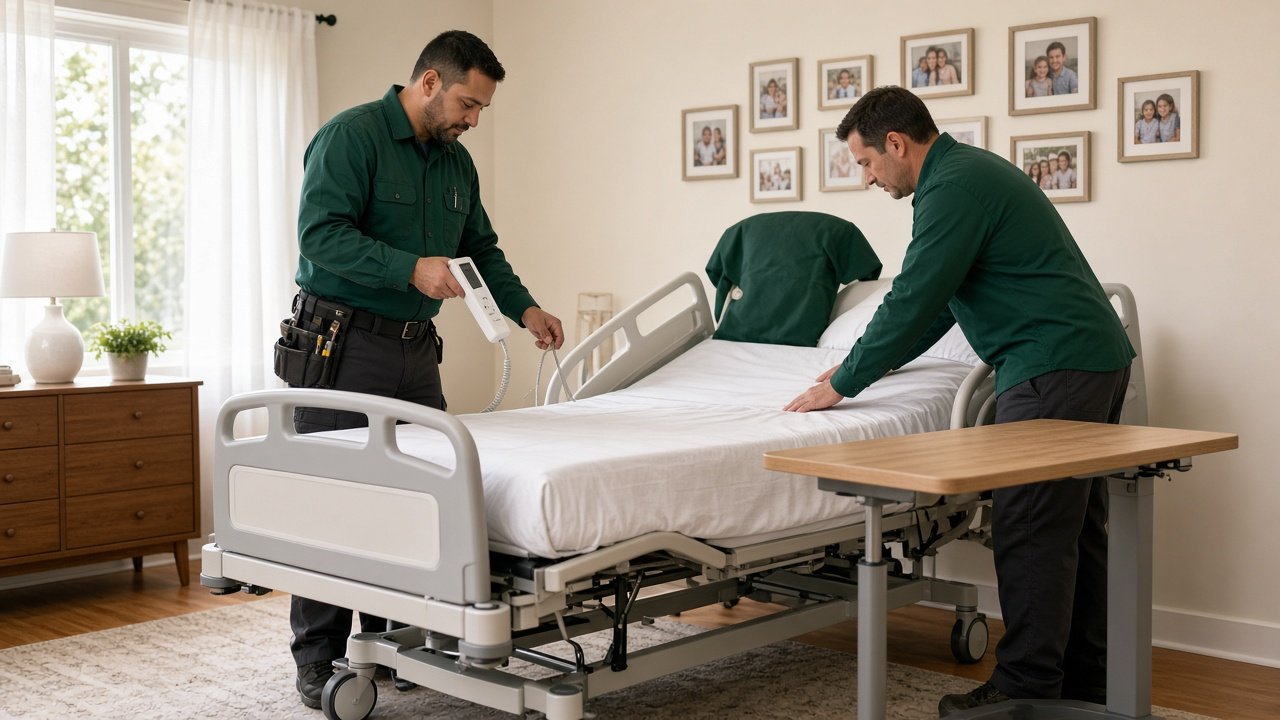
The usual failure is an upgrade the record does not support. A semi-electric bed is billed because the family wanted buttons, while the note never says the patient needs frequent or immediate position changes. A total-electric bed goes out as a convenience. A Group 2 mattress is delivered for a concern that meets Group 1, or no group. Those claims can pay and still be pulled back.
Salyx RCM bills beds, surfaces and lifts under DME billing services. The bed type, the surface and the lift are matched to the documentation before month one is billed.
Where bed and surface claims stall
The record does not show why an ordinary bed cannot position the patient, relieve pain, elevate the head more than 30 degrees for a stated condition, or accept required traction
Variable-height, semi-electric, heavy-duty or extra-heavy-duty features are billed without the extra criteria those codes require
A total-electric bed is billed, even though the LCD calls the electric height feature a convenience and directs a denial
The support surface group does not match the ulcer history, mobility and conservative care documented in the chart
A Group 2 surface, or (as of October 28, 2026) an E0194 air-fluidized bed, is delivered without Medicare prior authorization
A lift is billed for a patient who can already transfer, or a multi-positional transfer system is billed without a need for supine transfers
What we handle
We bill fixed-height, variable-height, semi-electric, heavy-duty and extra-heavy-duty hospital beds, plus covered accessories: trapeze equipment, bed cradles, side rails and replacement mattresses for a patient-owned bed. We also bill Group 1, Group 2 and Group 3 pressure-reducing support surfaces. We also bill patient lifts (including E0630, E0635, E0639 and E0640) and, when the criteria are met, multi-positional transfer systems. Home health notes, when present, often show how the patient actually transfers.
Medicare generally classifies standard hospital beds as capped rental. You submit a monthly rental, usually through month 13, and then the bed belongs to the patient. Our capped rental billing post is the reference we use for month counts, modifiers and breaks in service.
Choosing the right bed code
LCD L33820, which sits on top of NCD 280.7, covers a fixed-height hospital bed (E0250, E0251, E0290, E0291, E0328) when one or more of these are true: the patient must be positioned in ways an ordinary bed cannot manage; positioning is needed to relieve pain and cannot be done in an ordinary bed; the head of the bed must be elevated more than 30 degrees most of the time due to congestive heart failure, chronic pulmonary disease or aspiration; or traction is required that will only attach to a hospital bed. Elevation under 30 degrees usually does not justify a hospital bed.
A variable-height bed (E0255, E0256, E0292, E0293) needs those same basics, plus a need for a bed height different from a fixed-height bed so the patient can transfer to a chair, a wheelchair or a standing position. A semi-electric bed (E0260, E0261, E0294, E0295, E0329) needs the fixed-height basics plus frequent position changes, or an immediate need to change position.
Weight, not preference, drives the heavy-duty codes. A heavy-duty extra-wide bed (E0301, E0303) is covered when the fixed-height criteria are met and the patient’s weight is more than 350 pounds but not more than 600 pounds. An extra-heavy-duty bed (E0302, E0304) is covered when hospital-bed criteria are met and the patient’s weight exceeds 600 pounds.
A total-electric bed (E0265, E0266, E0296, E0297) is not covered. The LCD states that the height-adjustment feature is a convenience feature and that total-electric beds will be denied as not reasonable and necessary. We do not bill those codes in the hope a reviewer will see them as a semi-electric equivalent.
Accessories have their own tests. A trapeze is covered when the patient needs it to sit up because of a respiratory condition, to change position for a medical reason, or to get in or out of bed. Heavy-duty trapeze equipment adds a weight over 250 pounds. Side rails and safety enclosures have to be required by the patient’s condition and tied to a covered bed.
Support surfaces and lifts
Group 1 surfaces are covered when the patient is completely immobile, or has limited mobility plus a listed risk factor, or has a pressure ulcer on the trunk or pelvis plus a listed risk factor. Those risk factors are impaired nutrition, fecal or urinary incontinence, altered sensory perception and compromised circulation. Group 2 and Group 3 have tighter ulcer-stage and treatment-history requirements, which we read from the current LCDs.
Group 2 codes E0193, E0277 and E0371–E0373 already sit on Medicare’s Required Prior Authorization List. E0194 was added to that list nationwide on October 28, 2026. We do not recommend delivery of those items until DME prior authorization has produced a Unique Tracking Number.
A patient lift is covered when transfer between bed and a chair, wheelchair or commode is required and, without the lift, the patient would be confined to bed. Multi-positional transfer systems also require a need for supine transfers. If E1035 or E1036 is covered, payment for other mobility equipment stops under the lift LCD, which is why we coordinate with the power mobility file.
How we bill the first month and the ones after it
Before delivery we compare the practitioner’s notes to the bed-type criteria, the weight thresholds and, if a surface or lift is on the order, the matching LCD. We check whether prior authorization or a Written Order Prior to Delivery applies, and we set the first rental month with the correct modifiers, as in our HCPCS modifiers for DME guide.
After delivery, we keep the month count honest, including hospital stays and address changes, and we bill accessories only when the coverage test is met. Denials are worked from the positioning or ulcer record, then the setup is corrected. Rental months are billed from the supplier’s existing system, whether that is Brightree or Bonafide, NikoHealth or TIMS.
Why this equipment line gets its own review
Bed upgrades are easy to ship and hard to defend. The LCD is blunt about total-electric beds and about the extra tests for variable-height, semi-electric and heavy-duty frames. We apply those tests before month one. The accuracy target on claims we bill is 99.9%, and the collection target is 97%. ISO 9001 and ISO 27001 certifications sit behind the workflow. Notes that justify a bed or a surface are held under HIPAA.
Want us to look at a bed or support-surface claim that was denied?
Request a free billing auditFrequently asked questions
Is a total-electric hospital bed ever covered?
Under LCD L33820, no. The electric height adjustment is treated as a convenience feature, and total-electric beds are denied as not reasonable and necessary. If the patient meets semi-electric or variable-height criteria, bill the code that matches those criteria.
What weight thresholds apply to heavy-duty beds?
More than 350 pounds and not more than 600 pounds for heavy-duty extra-wide beds (E0301, E0303). More than 600 pounds for extra-heavy-duty beds (E0302, E0304). The basic hospital-bed coverage criteria must also be met.
Do support surfaces need prior authorization?
Group 2 codes E0193, E0277 and E0371–E0373 have required Medicare prior authorization nationwide for years. E0194 became a required-PA code nationwide on October 28, 2026. Check the current CMS list before delivery.
Do you also bill patient lifts on this page?
Yes. Lifts and support surfaces are included here so the room is billed as one equipment picture. Manual and power wheelchairs remain on the power mobility page, with a cross-check when both a lift and a wheelchair are on the file.
How long does Medicare rent a hospital bed?
Standard hospital beds usually follow the capped-rental payment category: monthly rental through month 13, then patient ownership. We keep that count, and any break in service, in your system.
Have us review recent bed and surface claims
If a bed-type or surface-group question is sitting in your denial queue, send the order and the positioning or wound notes. We will say whether they support the code that was billed. The free billing audit page, contact us or info@salyxrcm.com are all fine ways to start.